Our scientific approach
Evidence first. Trees second.
Our approach follows the principles of ecological restoration set out by the Society for Ecological Restoration (SER) and aligns with the aims of the UN Decade on Ecosystem Restoration (2021–2030): recover ecosystem integrity, not simply tree cover.
Read the site
Soil type, hydrology, existing vegetation and remnant seed sources are surveyed before any intervention.
Define the target
Nearby intact native woodland serves as a model for species composition, structure and function.
Right seed, right place
Seed collected from regional populations preserves genetic adaptation to local climate and soils.
Work with nature
Where seed banks and parent trees remain, protecting natural regrowth often outperforms planting.

Protection first
The best forest is one
that is never lost.
Old-growth woodlands such as Białowieża in Poland hold centuries of structure — veteran trees, standing and fallen deadwood, undisturbed soils — that no planting scheme can recreate within a human lifetime. Keeping them intact comes before any new planting.
Where forest has been lost, nature often does much of the work itself. A study in Nature found about 215 million hectares of deforested tropical land with the potential to regrow naturally, and research in Peru showed deforestation on titled Indigenous land at 5%, against 18% outside it. Secure land rights and natural regeneration are among the most cost-effective restoration tools we have.
What the evidence says works
Proven ways to keep forests standing.
The 2025 forest data offer clear lessons. Where governments enforce the law, where communities hold secure rights to their land and where nature is given room to regrow, forests recover. These four approaches shape how we choose and design every project.
Rules that bite
Brazil cut non-fire primary forest loss by 41% in a year after coordinated enforcement; violation notices rose 81% in 2023–2025.
Secure tenure
In Peru, titled Indigenous territories saw 5% deforestation against 18% outside; with regrowth counted, net loss fell to 3.5%.
Let forests return
About 215 million ha of deforested tropical land could regrow on its own — far cheaper than planting where seed sources remain.
Act before the season
With fire now behind 42% of global tree cover loss, prevention, fuel management and diverse stands matter as much as firefighting.
Plant or let it grow?
Every site starts with one question.
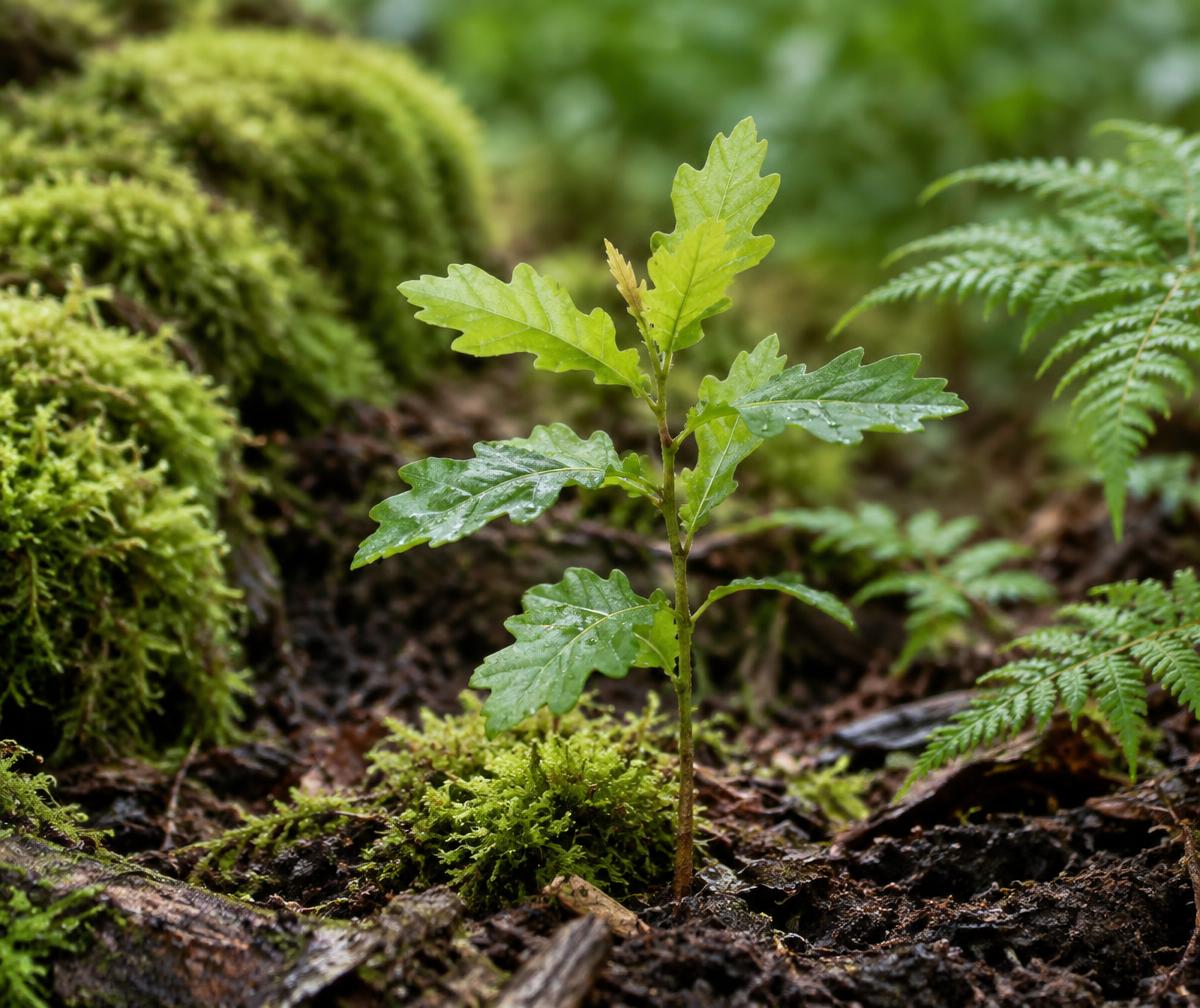
A study in Nature found that natural regrowth can cost as little as about $5 per acre, against more than $10,000 for planting — and naturally regrown forests often hold more biodiversity. So before we plant a single tree, we ask whether the land can heal itself. Read the briefing.
Look for seed sources
Natural regrowth potential is highest within 300 metres of existing forest, where seeds and pollinators are plentiful. We map nearby woodland before anything else.
Read the soil
Healthy soil organic carbon is a strong predictor of whether forest will return unaided. Degraded, compacted soils often need help first.
Remove the barriers
Often the most effective work is fencing out grazing animals, clearing invasive plants and reducing fire risk — then stepping back.
Plant where nature can’t
Where seed sources are gone or soils are exhausted, we plant diverse native species from local seed, in mixed and uneven-aged patterns.
The restoration journey
Plant thoughtfully. Protect patiently.
Understand the landscape
Start with the habitat, its history, and local ecological knowledge. Protect existing nature before deciding where trees belong.
Restore native diversity
Support natural regeneration where possible and choose a diverse mix of locally appropriate native trees when planting is needed.
Keep caring
Care for young trees, look for signs of habitat recovery, and adapt stewardship as the woodland grows.
Measuring recovery
What we observe over time.
Tree establishment
Survival, height and stem diameter recorded in permanent sample plots.
Returning life
Repeat surveys of plants, birds, pollinators and invertebrates.
Forest layers
Canopy cover, understory density and volume of deadwood habitat.
Below ground
Organic matter, leaf-litter depth and fungal activity in the soil.
Results are used for adaptive management: when monitoring shows something is not working, the plan changes. Worldwide, 55% of forests — 2.13 billion hectares — now have a management plan, yet insects, disease and severe weather still damaged about 41 million hectares in 2020 alone, mostly in temperate and boreal forests like ours. Careful observation is the first line of defence.
Restoring for a hotter climate
Diverse forests
withstand more.
In 2025 fire caused 42% of global tree cover loss. Canada lost 5.3 million hectares to wildfire, and France recorded its highest fire-related loss on record. In Switzerland, around 415,000 m³ of spruce was hit by bark beetles — less than the year before, but still a warning.
That is why we plant and protect mixed, native, uneven-aged stands rather than single-species blocks. Varied species and ages spread the risk from drought, pests and fire, and give wildlife more places to live.
Europe is already moving this way: uneven-aged forest rose from 28.2% to 36.3% of the area reported, broadleaved trees from 37% to 40%, and plantations fell to 2.4%. Swiss researchers add a practical rule for 2026 — monitor consistently and remove newly infested trees fast, especially where snow broke the canopy.

A greener future starts with us.
Be part of a world where forests — and all life within them — flourish.